

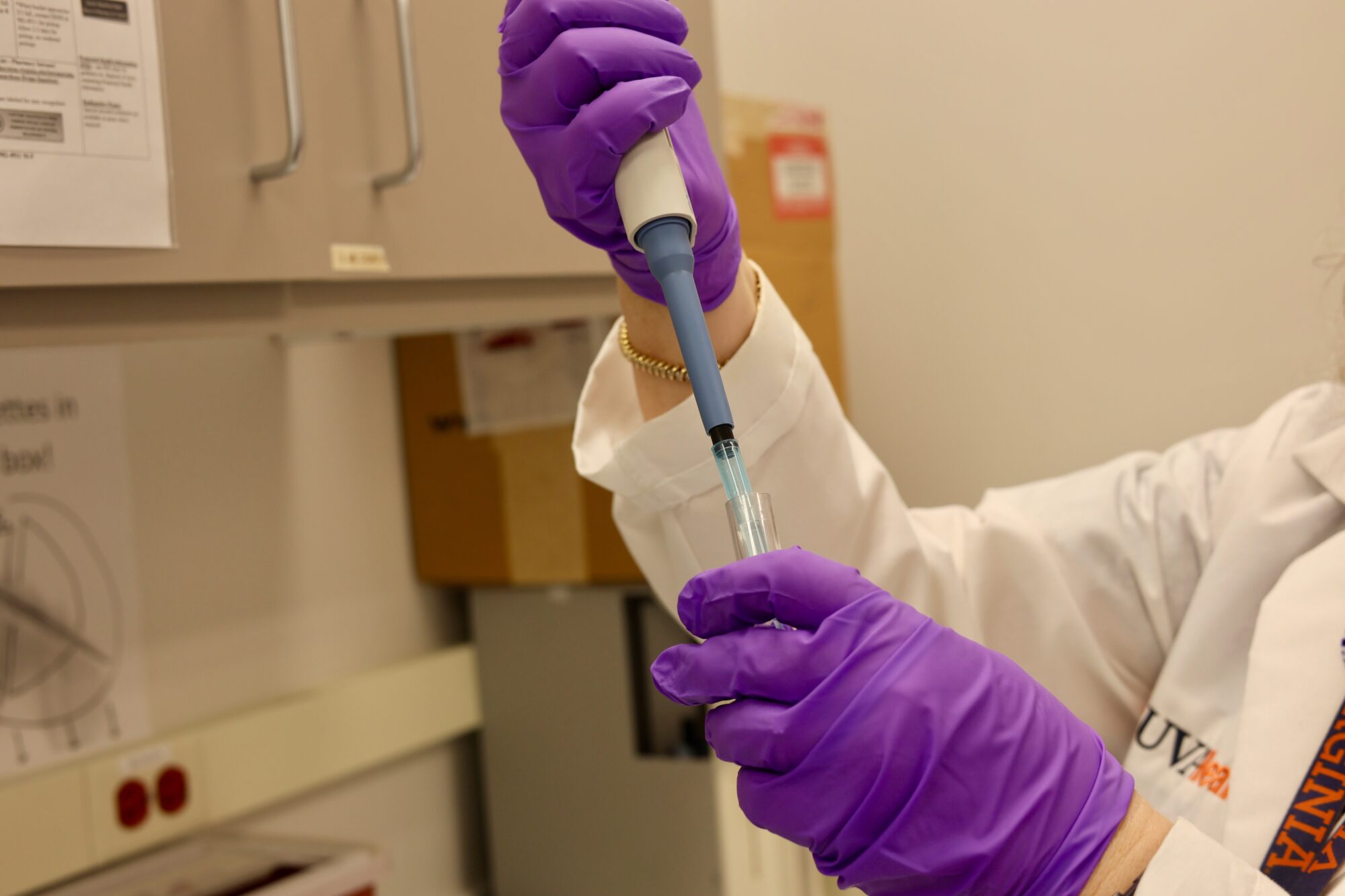
From Menopause to Mental Health
Jennifer Payne, professor and vice chair of research in the department of psychiatry in the School of Medicine, studies reproductive milestones and women’s mental health. She’s found that these milestones each carry opportunities to better understand women’s health and improve outcomes.
Most recently, she published research revealing that women were experiencing perimenopause symptoms at a younger age than expected. The study, funded by the Flo app, has major implications for how women’s physical health is understood in clinical settings.
We see perimenopause in the 40s and 50s, but women as young as in their 30s were reporting some symptoms consistent with perimenopause,” Payne said. “What was surprising about the study was that women were reporting significant symptoms that impact their functioning, and they weren’t seeking care.

Perimenopause has generally been understudied and thought of as just a part of being a woman. Payne seeks to change this narrative.
“What this study and other studies like it are doing are bringing it to the general public and putting it on the table for discussion. And I’m hopeful it will spark further research and maybe we’ll eventually find ways to make women more comfortable during these reproductive life events,” Payne said.
Predicting the onset of postpartum depression
Payne had the idea of studying perinatal mental disorders during an NIH fellowship. While researching the underlying biology of mood disorders, Payne realized that she could predict the onset of postpartum depression by measuring biological factors before and after the development of a depressive episode in pregnant women.
This catapulted Payne into her current research. At UVA, Payne started the Reproductive Psychiatry Research Program.
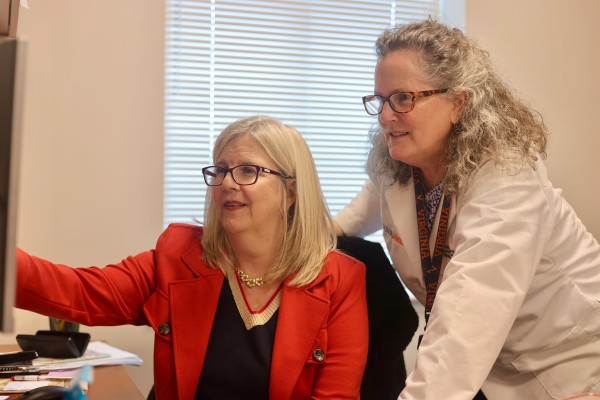
Currently, Payne holds two patents related to epigenetic biomarkers that are predictive of postpartum depression and premenstrual dysphoric disorder. By collecting a blood sample from the third trimester, Payne can predict if a pregnant woman is at risk for postpartum depression. From these results, prevention methods can be determined.
Risks for postpartum depression
One of Payne’s biggest challenges is battling misinformation about treating psychiatric illness during pregnancy. While some doctors still think that women cannot take psychiatric medications during pregnancy, Payne has a different viewpoint.
“It is far better to manage a woman’s psychiatric condition and keep her stable throughout pregnancy than to stop medication,” Payne said. “A mom being psychiatrically ill is a big risk and increases negative outcomes for that pregnancy.”
A woman’s untreated psychiatric illness also has profound effects on the development of her children.
“We know that when mom is seriously depressed postpartum, her children have lower IQs, slower language development and more behavioral problems,” Payne said. “We know that adverse childhood events have lifelong health implications, and one of those adverse childhood events is psychiatric illness in the household. So if we can prevent mom from becoming psychiatrically ill, we reduce the risks for those children.”
Others in the field of reproductive psychiatry have started expanding their research lens to include the mental health effects of postpartum depression on fathers, emphasizing the importance of understanding the disorder.
“We know that if mom is depressed, dad’s more likely to be depressed as well. So, again, preventing postpartum depression may have repercussions not only for the children but for the entire family,” Payne said.
Payne seeks to continue her research on biomarkers associated with psychiatric disorders and reproduction, as well as spread awareness on issues associated with women’s mental health.
I’m hoping to change the standard of care for pregnant women.
This article was featured in our 2025 Annual Research Report. You can find the full report with more research stories here: https://research.virginia.edu/about/fast-facts/annual-report-2025