

NIH Investment Advances UVA’s Biomedical Data Science Innovation Lab
The National Institutes of Health has awarded nearly $2.7 million over five years to advance the University of Virginia’s Biomedical Data Science Innovation Lab, building on a model that has brought together more than 150 early-career researchers to address complex challenges in human health.
The new award, led by John Darrell “Jack” Van Horn, Quantitative Foundation Distinguished Professor of Data Science and Professor of Psychology at the University of Virginia, provides $539,999 annually through the National Institute of General Medical Sciences’ Innovative Programs to Enhance Research Training program. The project will run through March 2031.
The funding supports “Advancing Biomedical Data Science through Integrated Mentorship, Collaborative Innovation, and Targeted Research Development,” the next phase of the Biomedical Data Science Innovation Lab and Seminar Series (BDSIL).
“This support from the NIH is an investment in a very unique Team Science model which brings newly minted junior faculty together around problems they could not solve alone,” said Van Horn. “By connecting biomedical researchers with data scientists who bring different methods, perspectives, and expertise, we can form new teams, ask better questions, and develop ideas that have the potential to become meaningful new research. That is what the Biomedical Data Science Innovation Lab was purposefully designed to do.”
Building Teams Across Disciplines
Rather than beginning with established research teams, BDSIL brings together investigators with complementary expertise who might not otherwise have an opportunity to work together. Through intensive innovation labs, mentorship, and an ongoing seminar series, participants identify shared research questions, combine methodological and domain expertise, and develop new approaches to biomedical challenges.
The new award follows more than $2 million in previous NIH support for BDSIL since 2021, bringing NIH investment in the initiative to nearly $5 million.
Since the original program launched at UVA, more than 150 junior faculty researchers have participated in BDSIL, with approximately 50 additional researchers participating in related programs that grew out of the initiative.
Those collaborations have continued beyond the labs themselves. BDSIL participants have gone on to receive NIH R01 and R21 grants, National Science Foundation awards, and internal research funding from their home universities.
The results demonstrate the potential of a model built not simply around teaching new research methods but around creating new interdisciplinary research teams.
From Collaboration to New Research
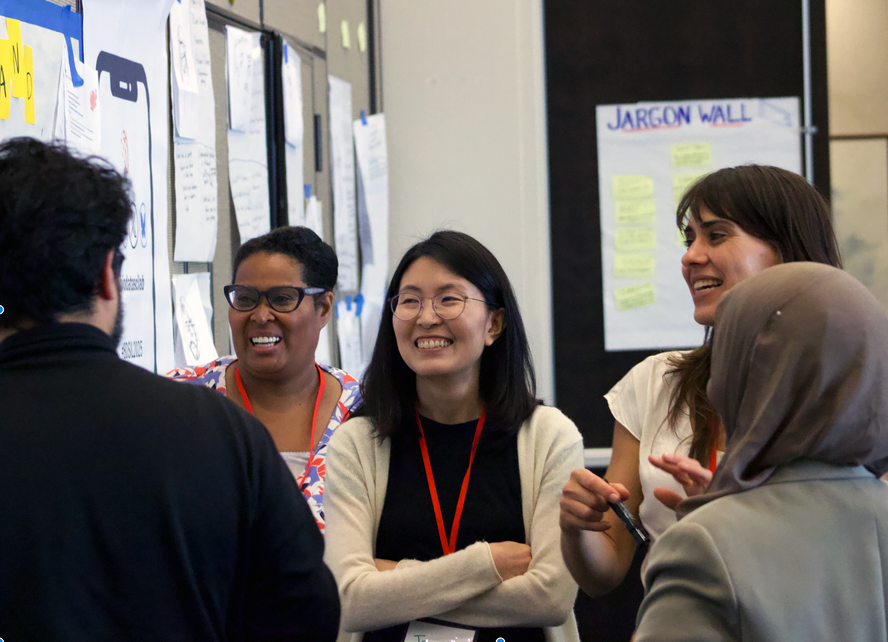
In May 2026, a UVA-focused edition of the Innovation Lab brought together 26 investigators from across the University, including researchers from the School of Data Science, School of Medicine, and the Paul and Diane Manning Institute of Biotechnology.
Over several days, participants formed interdisciplinary teams around emerging research questions and ultimately developed six grant-ready projects. Their work explored areas including multi-omic data integration, machine learning, foundation models, computational reproducibility, and artificial intelligence-enabled drug discovery.

The approach reflects a growing reality across biomedical science: Increasingly complex research questions require expertise that spans traditional disciplinary boundaries. Advances in artificial intelligence, machine learning, and computational methods, coupled with the growing availability of large and diverse biomedical datasets, are creating new opportunities for discovery.
BDSIL is designed to help researchers turn those opportunities into collaborations and, ultimately, new research.
Investing in the Next Generation of Researchers
The latest NIH investment will allow Van Horn and collaborators to expand that work through integrated mentorship, collaborative innovation, and targeted research development, with an emphasis on supporting early-career faculty as they establish independent research programs.
For the School of Data Science, the initiative also demonstrates how data science can serve as a connective discipline, bringing together researchers, methods, and ideas from across traditional academic boundaries.
With nearly $5 million in NIH support since 2021 and a growing network of researchers and interdisciplinary teams, BDSIL is building a community equipped to apply data science to some of the most challenging questions in biomedical research.
The Biomedical Data Science Innovation Lab and Seminar Series is supported by the National Institute of General Medical Sciences, which is part of the NIH.
Read more research news from School of Data Science.
This article was originally published here: https://api.datascience.virginia.edu/news/nih-investment-advances-uvas-biomedical-data-science-innovation-lab