Environment

At UVA, environmental research brings together scientists, scholars, and communities to tackle some of the world’s most urgent challenges—from climate change and water resources to ecosystem health and sustainability. Through the UVA Environmental Institute, the Department of Environmental Sciences, and other departments, researchers combine cutting-edge science with real-world action to build a more resilient, healthy, and sustainable future.
Catching fish with students to study
Environment

Your Thermostat Could Be Costing You More Than You Think

Extreme weather is straining the power grid, driven largely by residential heating and cooling habits. Darden professor Saed Alizamir analyzed granular smart thermostat data to reveal how automation and manual overrides affect energy use. His research suggests redesigning thermostats could cut costs, ease grid pressure, and help both consumers and the environment.

Smiling man in a suit holds his book Why Carbon Taxes Failed outside the brick Randall Building entrance.
Environment

There’s a Simple Solution to Fixing Climate Change, So Why Isn’t It Working?

Carbon taxes have long been promoted as one of the most effective ways to reduce greenhouse gas emissions. So why have they sparked political backlash around the world? In his new book, Why Carbon Taxes Failed, UVA sociologist Daniel Driscoll draws on research across 20 democracies to examine why climate policies succeed in some countries and falter in others and what that means for future efforts to reduce emissions.

Students look through binoculars
Annual Report

Shore to Summit: UVA’s Field Research Stations

From the Eastern Shore to the Southern Appalachians, UVA operates four field research stations across Virginia’s ecologically diverse landscape. Morven Farm, Blandy Experimental Farm, Mountain Lake Biological Station, and the Coastal Research Center each serve as extensions of Grounds, offering unique environments where students, faculty, and researchers study ecology, sustainability, and the natural world.

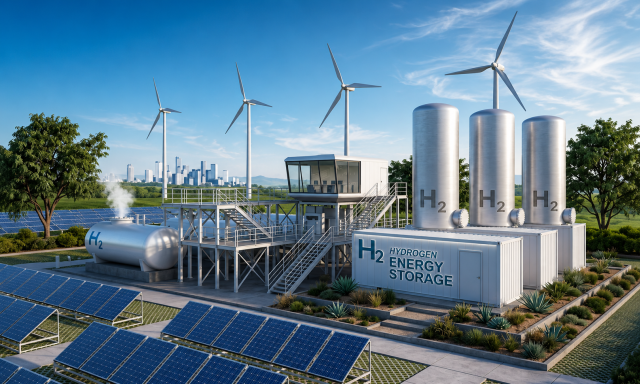
Hydrogen energy storage facility with H2 tanks, wind turbines, and solar panels near a city skyline
Environment

Why Long-Duration Energy Storage Could Be the Key to Grid Reliability

Podcast

When you think of energy storage what comes to mind? Batteries. But what if you need to store 1 GW of power (roughly 700,000 homes) over days, weeks, or a whole season? This is increasingly becoming a reality with an electric grid stretched by data center demand. Your traditional Li-Ion battery won’t cut it. It will require large-scale systems built to store and discharge massive amounts of energy on demand.