
Q&A: Are there such things as ‘girl brains’ and ‘boy brains’?
The leader of UVA’s Baby Lab scrutinizes new research about newborns’ attention to faces.


The leader of UVA’s Baby Lab scrutinizes new research about newborns’ attention to faces.

The FDA has approved Juvmo (tavapadon), a once-daily Parkinson’s pill developed from UVA Health research by Richard Mailman, PhD, and Xuemei Huang, MD, PhD. Unlike levodopa, Juvmo selectively activates D1 dopamine receptors, potentially offering longer-lasting symptom relief with fewer side effects. AbbVie will market the drug, available October.

The FDA has approved Juvmo (tavapadon), a once-daily pill for Parkinson’s disease rooted in decades of UVA Health research by Richard Mailman and Xuemei Huang. Unlike levodopa, this first-in-class D1 agonist selectively activates dopamine receptors, potentially offering fewer side effects and longer-lasting symptom relief for the 11 million people worldwide living with Parkinson’s.

UVA Health researchers report focused ultrasound is nearing a breakthrough for treating brain tumors, Alzheimers and Parkinsons by delivering gene therapies across the blood-brain barrier. New non-viral nanoparticle approaches, led by Richard Price and colleagues, could enable precise, repeatable treatments targeting tumor cells while engaging the immune system, with findings published across three scientific papers.

A UVA Health scientist has developed a drug, Kamuvudine K-9, that reversed paralysis and vision loss in a mouse model of multiple sclerosis, going beyond existing treatments that only prevent future attacks. Derived from HIV drugs, K-9 preserved nerve fibers and reduced nerve damage markers, offering promising evidence for future human clinical trials.

Through neuroscience and cross-disciplinary collaboration, Tanya Evans examines the memory systems that influence learning, with the goal of improving outcomes for children who struggle in school.
GET THE STORIES BEHIND THE RESEARCH
Receive updates about the discoveries, researchers, and ideas shaping our world — straight from UVA.
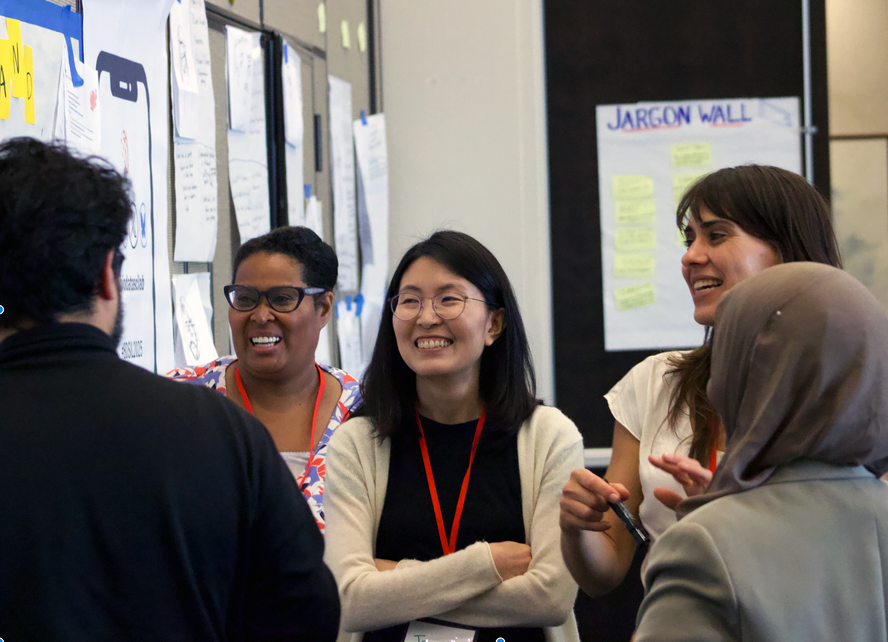
New NIH support advances UVA’s Biomedical Data Science Innovation Lab, bringing data scientists and biomedical researchers together to accelerate discovery.

Postdoctoral fellow William “Tré” Mills III, PhD, has received an NIH K99/R00 grant to study how microglia regulate blood flow in the brain’s smallest vessels, a key factor in Alzheimer’s disease. Working in Ukpong Eyo’s lab at UVA, Mills aims to identify precise drug targets for safer, more effective Alzheimer’s treatments.
UVA neuroscientist Tanya Evans investigates why some children struggle with reading or math by studying the brain mechanisms behind learning differences like dyslexia. Through cross-disciplinary collaborations and a $3 million NIH grant, her research explores how declarative and procedural memory systems shape skill development, with findings pointing toward targeted interventions for students who need them most.

With graduate student volunteers from across neuroscience fields, UVA’s Brain Science Outreach program reached more than 1200 elementary, middle, and high school students in Virginia last year.

U Ask, UVA Answers returns this fall with talks at Jefferson-Madison Regional Library and new sessions at Crozet Library. Sarah Flowers kicks off September discussing Alzheimer’s disease and genetics research. Upcoming speakers include Bryan Berger on food biotechnology in October and Natasha Diba Sheybani on ultrasound breast cancer treatment in November.

UVA researchers have discovered that calcium channels in glioblastoma tumor cells and surrounding neurons drive tumor growth. Blocking these channels with the FDA-approved drug mibefradil slowed tumor formation in mice and could sensitize cancer cells to radiation and chemotherapy, offering a promising new treatment strategy for this deadly brain cancer.