
Can AI Systems Be Designed to Support Human Autonomy and Societal Well-Being?
Darden experts are exploring the balancing act between AI’s promise and perils through research on how AI systems promote human flourishing — and squash it.


Darden experts are exploring the balancing act between AI’s promise and perils through research on how AI systems promote human flourishing — and squash it.

UVA researchers introduce SNIFF, a practical framework to help scientists evaluate research software, improving reproducibility, security, and trust in science.

Hannah Bako is an Assistant Professor at UVA’s School of Data Science, where she studies how people create and make sense of data through charts, graphics, and interactive visuals with the goal of making data more understandable for everyone.

A UVA Health psychiatrist explains new guidelines for safely reducing antidepressants and who should stay on them.

A global study found that while loneliness affects about one in five people worldwide, it is far more common in low-income countries than in wealthier nations. Researchers found no clear evidence of a growing global loneliness epidemic, suggesting loneliness is shaped not only by personal circumstances but also by social, economic, and community conditions.
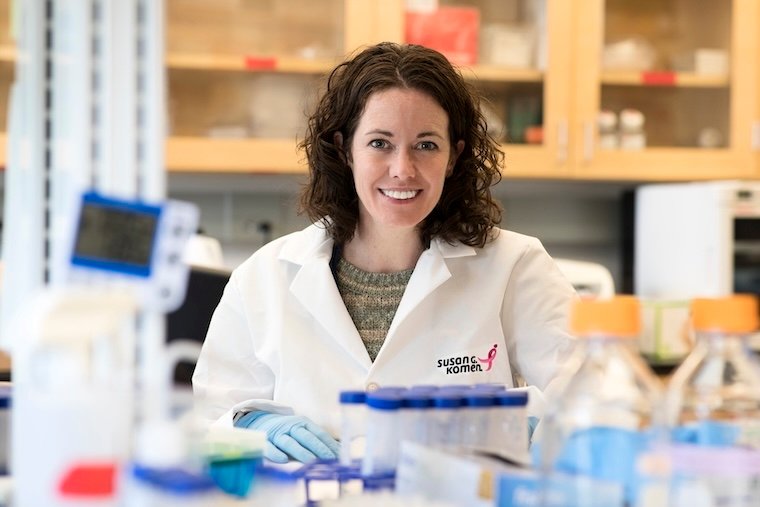
New research from UVA’s Melanie Rutkowski, PhD, and colleagues helps explain how the gut microbiome – the collection of microorganisms that live in and on our intestines – plays a role in the spread of hormone receptor-positive (HR+) breast cancer.
GET THE STORIES BEHIND THE RESEARCH
Receive updates about the discoveries, researchers, and ideas shaping our world — straight from UVA.

With artificial intelligence being adopted rapidly by healthcare organizations around the country, a UVA Health doctor and colleague at Clemson University have developed a framework to ensure that the technology is implemented in a way that ensures patient care remains the top priority.

Kareem El-Ghazawi, a graduating Ph.D. student in the UVA Department of Biomedical Engineering, found evidence that pericytes play a larger role in Alzheimer’s disease than previously recognized. His findings will be published in Nature’s Communications Biology.

A University of Virginia School of Engineering and Applied Science faculty researcher earned a major new federal grant to develop emerging tools to work with some of the rarest circulating cells in the human body, a step toward better treatments for diseases such as cancer and infection.

The study identifies a biological clue that could one day help track therapies and improve care.

The Weldon Cooper Center has released a new vintage of population projections for the United States as a whole, all 50 states, and the District of Columbia. The product is benchmarked on the 2020 Decennial Census and the U.S. Census Bureau’s 2025 Population Estimates. The projections extend through 2050 and provide a consistent framework for examining future population outlook across states and regions.

The world is falling behind on its development goals, putting the future of vulnerable populations at risk. While catching up is clearly a priority, solutions are less obvious, particularly at […]